Best Hikes on Oahu, Hawaii: Easy to Hardest Trails, Distances and Safety Tips
By Blake Penson · August 1, 2024
Category: general-travel
10 min read
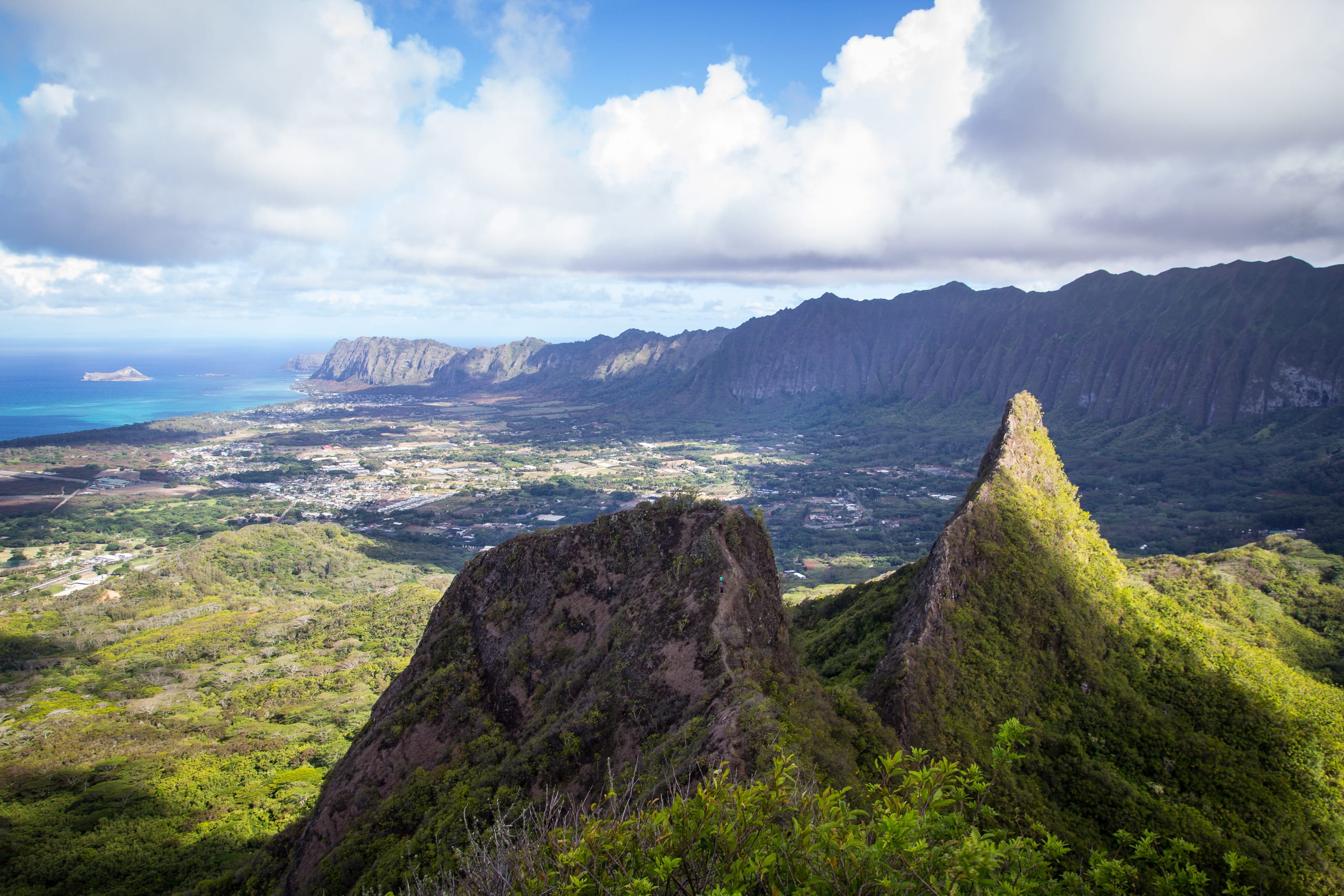
The best hikes on Oahu range from easy classics to some of the most dangerous ridge scrambles in the United States. For first-timers, Diamond Head (a 761 ft volcanic crater summit above Waikiki, which requires an advance reservation for non-residents), Manoa Falls (a rainforest walk to a roughly 150 ft waterfall) and the Lanikai Pillbox (Kaʻiwa Ridge) are the top picks. For a workout, Koko Crater's 1,000-plus railway steps are the island's most famous leg-burner. The hardest hikes on Oahu are the knife-edge ridges: Olomana's three peaks, Puʻu Manamana, and the Koʻolau Summit Trail, which involve exposed rock, ropes and real fall risk. The Haʻikū Stairs (Stairway to Heaven) are closed and being removed, and trespassing is illegal. Trail distances below are approximate; check current conditions and closures with Hawaii's Division of State Parks, the Nā Ala Hele trail program or the City and County of Honolulu before you go.
| Trail | Difficulty | Approx. round trip | Highlights |
|---|---|---|---|
| Diamond Head | Easy–moderate | ~1.6 mi | Crater summit, Waikiki views; reservation needed |
| Manoa Falls | Easy | ~1.6 mi | Rainforest, ~150 ft waterfall |
| Lanikai Pillbox (Kaʻiwa Ridge) | Moderate | ~1.8 mi | Mokulua Islands, sunrise |
| Koko Crater stairs | Hard (short) | ~1.8 mi | 1,000+ steps, Hanauma Bay views |
| Aiea Loop | Moderate | ~4.5–5 mi | Forest loop, state park |
| Wiliwilinui Ridge | Moderate–hard | ~4 mi | Koʻolau ridge views |
| Kaʻau Crater | Hard | ~5.5 mi | Waterfalls, crater rim, ropes |
| Olomana (Three Peaks) | Very hard, dangerous | ~4 mi | Exposed ridges, ropes |
| Haʻikū Stairs | Closed | – | Being removed; no access |
Why hike on Oahu?
Oahu is famous for beaches, but its interior is a world of green volcanic ridges, rainforest valleys and waterfalls. Two old shield volcanoes form the island: the Waiʻanae Range in the west, home to Mount Kaʻala, Oahu's highest point at 4,025 ft, and the Koʻolau Range, whose fluted cliffs run down the windward side. Many of the best trails are less than 30 minutes from Honolulu, so you can hike in the morning and be on the beach by lunchtime.
The terrain is also more serious than it looks. Volcanic rock crumbles, mud turns trails into slides, and ridges that look like gentle green spines are often knife-edges with drops on both sides. Rescues are common on Oahu's trails, so match your hike to your experience.
Easy and classic hikes
Diamond Head (Lēʻahi)
Diamond Head is Oahu's best-known hike and a great introduction. The trail climbs inside a volcanic tuff cone to the summit at 761 ft, through switchbacks, stairs and a tunnel built for the island's coastal defences in the early 20th century. From the old fire-control station at the top, you look over Waikiki, Honolulu and the Pacific.
The round trip is about 1.6 miles with roughly 500 ft of elevation gain and takes most people one and a half to two hours. Diamond Head State Monument requires advance reservations for non-residents, so book before you go. Go early: it gets hot, and the summit is exposed to the sun. Bring water and a hat.
Manoa Falls
Manoa Falls is a short rainforest walk in the Manoa Valley, a few minutes from Waikiki. The trail climbs gently through bamboo, banyan and eucalyptus to a waterfall of about 150 ft. It is about 1.6 miles round trip and takes around an hour to an hour and a half.
The trail is often muddy and slippery, so wear shoes with good grip. Swimming in the pool under the falls is not recommended because of rockfall and the risk of leptospirosis, a bacterial infection found in Hawaii's fresh water.
Lanikai Pillbox (Kaʻiwa Ridge)
The Lanikai Pillbox hike climbs a short, steep ridge above Lanikai Beach on the windward coast to old military pillboxes. The view over Lanikai, Kailua Bay and the Mokulua Islands is one of the best on Oahu, especially at sunrise. It is about 1.8 miles round trip, with a steep, rocky and sometimes slippery start. Parking in the residential neighbourhood is restricted, so respect local rules.
Aiea Loop
The Aiea Loop trail in Keaʻiwa Heiau State Recreation Area is a forested loop of about 4.5 to 5 miles along a ridge above Pearl Harbor. It is a good moderate hike with shade, views of the Koʻolau Range and the remains of a World War II plane crash near the trail. It is a popular choice for families and runners.
Challenging hikes
Koko Crater stairs
Koko Crater's "stairs" are the old railway ties of a tramway built during World War II to a military installation at the summit. The trail climbs more than 1,000 steps straight up the side of the crater, gaining close to 1,000 ft in less than a mile. Part of the way up, the track crosses a bridge-like section with gaps underneath that can be unnerving.
It is short but brutal, and very hot in the midday sun. The summit view takes in Hanauma Bay, Hawaii Kai and the east side of Oahu. Go early, take plenty of water, and be careful on the way down, when tired legs and steep steps cause falls.
Wiliwilinui Ridge
Wiliwilinui Ridge climbs the Koʻolau Range above Waiʻalae Iki. The lower section follows a wide track, but the upper ridge is steep, muddy and has ropes and stairs in places. It is about 4 miles round trip. On clear days, the top gives views of both the windward and leeward coasts. Access is through a residential area, and you may need to check in with security at the gate.
Kaʻau Crater
The Kaʻau Crater hike is a demanding adventure through rainforest, past several waterfalls and up to the rim of a volcanic crater. The trail is steep, muddy and has rope sections beside waterfalls. It is not for beginners. Check current access before you go, as the route crosses areas with access restrictions and the trail can change after storms.
The hardest hikes on Oahu
If you searched for the hardest hike on Oahu, these are the trails locals talk about. They involve exposed ridges, crumbling rock and drops where a fall could be fatal. They are only for experienced hikers comfortable with scrambling, and ideally with someone who knows the route.
Olomana (Three Peaks)
Olomana, the "Three Peaks" hike near Kailua, is one of the most famous and dangerous hikes on the island. The first peak is steep with ropes; the second and third peaks involve narrow ridges, near-vertical rock and heavy exposure. Several hikers have died on Olomana. Many people sensibly stop at the first peak. If you continue, do so only in dry conditions and with experience.
Puʻu Manamana
Puʻu Manamana, above Kahana Valley on the windward coast, follows a razor-thin ridge with sheer drops on both sides and sections of scrambling. It is often described as one of the most dangerous hikes in Hawaii. It is not a trail for casual hikers.
Koʻolau Summit Trail
The Koʻolau Summit Trail is not a single trail but a route along the crest of the Koʻolau Range, connecting to ridges from both sides of the island. It is overgrown, often wet and cloudy, and very exposed in places. It is used by experienced local hikers who know the routes and usually requires careful planning.
Mount Kaʻala
Mount Kaʻala, Oahu's highest point at 4,025 ft, is in the Waiʻanae Range. Routes to the summit are steep, with ropes and cables in places, and the top is a boggy plateau with rare plants and a federal aviation facility. Check current access rules, as some approaches cross restricted land.
The Haʻikū Stairs (Stairway to Heaven)
The Haʻikū Stairs, a steel staircase of nearly 4,000 steps up the Koʻolau cliffs, were once one of Hawaii's most famous hikes. The stairs were officially closed to the public for decades, and hikers who climbed them were trespassing. The Honolulu City Council voted to remove the stairs, and removal began in 2024. Do not attempt to access the stairs or other closed areas: it is illegal, dangerous and disrespectful to the local community.
Oahu hikes by area
Honolulu and the south shore: Diamond Head, Manoa Falls, Wiliwilinui Ridge and Kaʻau Crater are all a short drive from Waikiki. Koko Crater sits at the eastern end of the south shore near Hanauma Bay.
Windward (east) side: The Lanikai Pillbox, Olomana and Puʻu Manamana are on the windward coast, where the Koʻolau cliffs rise behind Kailua and Kāneʻohe. This side is greener and wetter, so expect more mud.
Central and leeward: The Aiea Loop sits above Pearl Harbor, while the Waiʻanae Range in the west, including Mount Kaʻala, is drier, hotter and less visited.
North Shore: The North Shore has coastal walks and short trails near Waimea and the far northwestern tip at Kaʻena Point, where a coastal path leads to a seabird reserve.
What to bring
- At least 1–2 litres of water per person for short hikes, and more for long ridges.
- Sunscreen (reef-safe if you are heading to the beach afterwards), a hat and sunglasses.
- A light rain jacket, as showers can arrive suddenly.
- Shoes with good grip; some locals use shoes with aggressive lugs for muddy ridges.
- Snacks, a phone with offline maps, and a headlamp if there is any chance of finishing late.
- Gloves can help on rope sections.
Respecting the land
Many of Oahu's mountains and valleys are culturally significant to Native Hawaiians, and some trails pass near sacred sites, such as the heiau (temple) at Keaʻiwa. Treat these places with respect, stay on trails and do not move rocks or leave offerings. Many trailheads are in residential neighbourhoods, so park legally, keep noise down early in the morning and do not block driveways. Invasive species are a major threat to Hawaii's native forests: clean mud and seeds from your shoes before and after hikes, using the boot brushes found at many trailheads.
Hiking safety on Oahu
- Check the weather. Rain makes trails muddy and slippery, and flash floods can occur in valleys and streams.
- Start early. Avoid the midday heat and be off the trail before dark.
- Carry plenty of water and sun protection.
- Wear shoes with good grip. Trail running shoes or light hiking boots work well.
- Stay on marked trails and respect closures and private property.
- Avoid fresh water in streams and pools, which can carry leptospirosis.
- Tell someone your plan, especially on ridge hikes.
- Know your limits. Turning back on an exposed ridge is always the right decision if you are uncomfortable.
- Leave no trace and clean your shoes to avoid spreading invasive species.
Do you need a guide to hike on Oahu?
Most popular trails, such as Diamond Head, Manoa Falls, the Lanikai Pillbox, Koko Crater and Aiea Loop, are easy to follow without a guide. For challenging ridge hikes such as Olomana, Puʻu Manamana and the Koʻolau Summit Trail, a local guide or experienced local hikers are strongly recommended. Guides can also share the history, culture and ecology of the island.
ExpedReview does not currently rank Hawaiian hiking companies. If Oahu's hikes leave you wanting bigger mountains, see our guides to the best hikes in Europe, mountaineering for beginners and how to train for mountaineering.
Frequently asked questions
What is the hardest hike on Oahu?
Olomana (Three Peaks), Puʻu Manamana and the Koʻolau Summit Trail are usually considered the hardest and most dangerous, due to exposed ridges and steep rock.
What is the best hike on Oahu for beginners?
Diamond Head and Manoa Falls are good choices. Diamond Head requires an advance reservation for non-residents.
Can you still hike the Haʻikū Stairs?
No. The stairs are closed and being removed. Accessing them is trespassing.
How many steps is Koko Crater?
The Koko Crater trail has more than 1,000 steps.
What is the highest point on Oahu?
Mount Kaʻala, at 4,025 ft, in the Waiʻanae Range.
What are the best hikes in Hawaii?
On Oahu, Diamond Head, Manoa Falls, the Lanikai Pillbox and Koko Crater are among the most popular. Other islands have famous hikes too, such as the Kalalau Trail on Kauai and the trails of Haleakalā on Maui.
When is the best time to hike on Oahu?
Early morning, year-round. The drier months, roughly April to October, usually have less mud.
Is hiking on Oahu dangerous?
Popular trails are generally safe with sensible preparation, but ridge hikes can be deadly. Mud, crumbling rock, heat and flash floods cause many rescues each year, so choose trails that match your experience and turn back if conditions are poor.
Do I need a permit to hike on Oahu?
Most trails do not need a permit, but Diamond Head requires advance reservations for non-residents, and some areas are closed or on private land.
Tags: oahu, hawaii, hiking-trails, diamond-head, manoa-falls